
Views: 0 Author: Site Editor Publish Time: 2025-11-04 Origin: Site


Plastic injection machines are vital in modern manufacturing. They produce complex parts quickly, accurately, and consistently. Understanding a plastic injection machine's main technical features helps manufacturers optimize efficiency, reduce waste, and maintain consistent product quality. In this article, you will learn about key components such as the injection unit, clamping system, molds, and control systems. We also explore energy efficiency, performance, versatility, and reliability, providing insights to achieve high-quality production and informed machine selection.
The injection unit is the core of a plastic injection machine, responsible for melting and transporting plastic into the mold. The screw rotates within a barrel, melting the plastic and mixing it uniformly before injection. Barrel temperature control ensures consistent melt quality, minimizing defects and improving overall production reliability. The screw design varies based on the type of plastic and product requirements, allowing customization for high-performance materials.
Nozzles are crucial for directing molten plastic into molds accurately. Different nozzle designs optimize flow for specific plastics, preventing overfill or incomplete molding. Precision nozzles reduce defects such as stringing or surface imperfections and improve part consistency across production runs. Some nozzles are adjustable to accommodate various mold designs, enhancing the versatility of the plastic injection machine.
Controlling injection pressure and speed is essential for achieving consistent product quality. Advanced machines allow precise regulation, which reduces internal stresses and material degradation. Optimized speed and pressure also impact cycle time, allowing manufacturers to increase throughput without sacrificing quality.
A robust plastic injection machine must handle a wide range of thermoplastics, composites, and specialty additives. Machines are rated for specific material properties, including viscosity and melt temperature. Choosing the right injection unit ensures that both standard and high-performance plastics can be processed efficiently, maintaining product integrity.
Clamping units maintain mold alignment and prevent deformation during injection. Hydraulic systems provide adjustable force and faster response times, while mechanical units offer durability and lower maintenance. Choosing the correct type depends on production volume and precision requirements.
Tie rods connect the moving and fixed platens, providing structural stability during injection. They prevent mold misalignment and ensure consistent part dimensions. Proper structural design is essential to withstand high clamping pressures without compromising safety.
Precise mold closing reduces flash, warpage, and leakage. Machines employ sensors and feedback loops to ensure molds align perfectly before injection begins. High-precision systems are particularly important for multi-cavity molds, where even minor misalignments can cause defects.
Clamping force must match part size and material to prevent deformation. Selecting the optimal force ensures quality and reduces energy consumption. Excessive force may damage molds, while insufficient force can cause defects.
The mold is the blueprint of every plastic part, dictating geometry, surface finish, and tolerances. Accurate cavity design ensures consistent production quality, reducing rework and scrap. Multi-cavity molds can dramatically increase throughput, but they demand precise injection and clamping alignment to avoid inconsistencies between cavities. Advanced software simulations can predict flow and cooling behavior, helping manufacturers optimize mold design for both complex and high-volume components. Material selection, gate location, and venting strategy also directly affect part quality and dimensional stability.
Efficient cooling channels are essential for controlling solidification rates and minimizing cycle time. Uniform heat removal prevents warping, sink marks, and internal stresses, which are critical for parts requiring tight dimensional tolerances. Modern molds may feature independent temperature zones, enabling better control of thick and thin sections within a single part. Optimized cooling design not only improves product consistency but also reduces energy consumption and prolongs mold life, particularly in high-volume production environments.
Single-cavity molds are suitable for large or low-volume parts, while multi-cavity molds significantly increase output for smaller components. The choice of mold type impacts cycle time, injection pressure, and clamping requirements. Multi-cavity molds demand careful balancing of filling, packing, and cooling to maintain consistent quality across all cavities. Manufacturers must weigh production volume, part size, and complexity to select molds that maximize efficiency while minimizing defects and material waste.
Mold material selection affects durability, heat transfer, and cost efficiency. High-strength steel molds provide excellent longevity and resistance to wear, ideal for long production runs. Aluminum molds offer faster heat dissipation and reduced cycle times but wear more quickly, requiring careful management. Selecting the right material balances longevity, thermal performance, and production speed. Incorporating surface treatments or coatings can further enhance mold durability, improve release characteristics, and reduce maintenance frequency.
Feature | Benefit | Consideration |
Multi-cavity design | Increased production volume | Requires precise clamping and injection |
Cooling channels | Reduced cycle time and warpage | Must match part geometry |
Mold material | Longevity and thermal management | Steel vs. aluminum trade-offs |
Cavity accuracy | Consistent part dimensions | Impacts overall product quality |
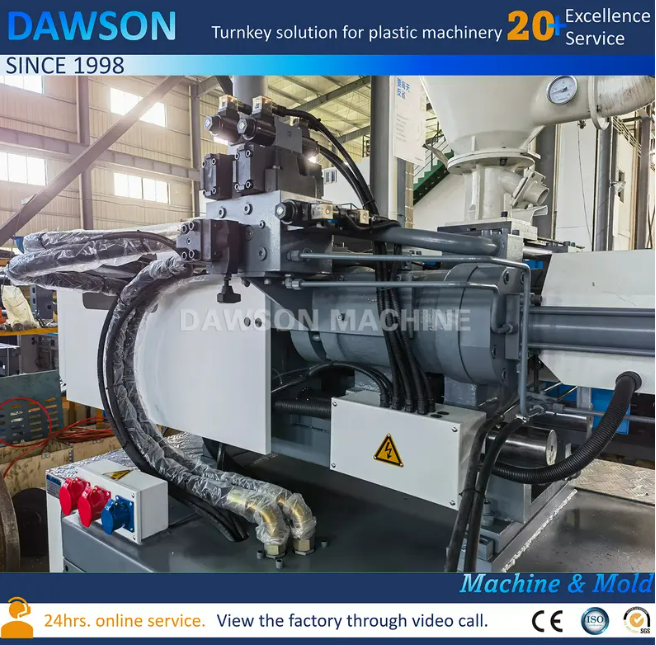
Modern plastic injection machines provide intuitive interfaces that allow operators to monitor and adjust parameters like temperature, pressure, and injection speed in real time. Touchscreen panels and visual feedback reduce operator errors and simplify complex operations. Data logging captures process trends and machine performance, enabling proactive troubleshooting before problems affect production. These systems improve operational efficiency, reduce waste, and help maintain consistent quality across shifts or multiple operators.
PLC and CNC technologies automate sequences and synchronize injection, clamping, and cooling operations. Automation ensures repeatable results, minimizes human error, and enhances throughput. Integration allows dynamic adjustment of process parameters in response to material variations, part geometry, or mold design changes. Advanced systems also support remote monitoring and centralized control, enabling manufacturers to manage multiple machines simultaneously while maintaining high standards of quality and efficiency.
Tightly controlled process parameters are essential for consistent product quality. Automated adjustments to temperature, injection speed, pressure, and cycle time help accommodate changes in raw material or mold conditions. Parameter management ensures each part is produced within exact tolerances, reducing scrap rates and improving customer satisfaction. Real-time feedback loops and adaptive control enhance reliability, especially in high-volume or multi-cavity production.
Intelligent monitoring systems detect abnormal wear or deviations in real time, alerting operators to potential issues before breakdowns occur. Predictive maintenance reduces unexpected downtime and avoids costly repairs. By analyzing historical performance data, these systems can optimize maintenance schedules and extend component lifespan, ensuring continuous high-quality production with minimal interruptions.
Servo-driven systems combine precise motion control with reduced energy consumption, providing efficiency gains over traditional hydraulic systems. Hydraulic systems remain robust but often consume more energy and require frequent maintenance. The choice affects long-term operating costs, productivity, and sustainability. Manufacturers must consider energy usage relative to production volume and machine performance when selecting the ideal system for their operation.
Barrel insulation and precise heating zones reduce thermal losses and stabilize melt temperatures. Efficient heat management improves part quality, reduces energy costs, and enhances process repeatability. Maintaining consistent thermal profiles minimizes defects such as warpage or voids while contributing to lower energy consumption in high-volume operations.
Variable speed drives (VSDs) adjust motor power according to production demand, optimizing energy usage and reducing mechanical wear. VSDs allow gradual acceleration and deceleration of machine components, improving process control and lowering electricity consumption. Proper implementation extends machine life and aligns energy input with production requirements.
Automated feeders, material recyclers, and optimized conveyance systems reduce waste and improve sustainability. Integrating recycling loops minimizes the use of virgin material and reduces disposal costs. Efficient material handling ensures steady supply to the injection unit, contributing to consistent cycle times and high-quality outputs.
Modern injection machines can produce intricate parts with thin walls, undercuts, and detailed features. Advanced injection units and precise molds enable tight tolerance control, ensuring dimensional accuracy even in highly complex designs. The combination of accurate injection and effective mold cooling ensures consistency across multiple production cycles.
Reducing cycle time without compromising quality is critical for productivity. Faster injection, improved mold cooling, and automated mold changeovers contribute to shorter cycles. Efficient scheduling and synchronized processes optimize throughput, allowing manufacturers to meet high-volume production demands without sacrificing part integrity.
Machines designed for multi-product production allow quick mold changes and support a variety of plastic grades. This flexibility is essential for manufacturers handling diverse product lines, prototypes, or seasonal variations. Switching molds quickly without extensive downtime improves operational efficiency and reduces labor costs.
Maintaining uniform quality across large production runs reduces scrap, rework, and warranty issues. Consistency relies on precise integration of the injection unit, clamping system, molds, and control systems. Continuous monitoring and automated adjustments ensure stable production conditions even during extended operations.
Strategy | Benefit |
Faster injection speeds | Reduced cycle time |
Optimized mold cooling | Improved product consistency |
Automated mold switching | Enhanced production flexibility |
High-precision injection | Reduced defects in multi-cavity molds |
Strong frames resist deformation under high clamping forces, ensuring machine longevity. Comprehensive stress analysis during design prevents premature failures and enhances reliability. A rigid structure maintains consistent part quality, particularly during high-pressure injection or multi-cavity operations.
Screws, barrels, and molds made of durable materials minimize wear and reduce the frequency of replacement. Advanced surface treatments and coatings further extend component life, maintaining consistent machine performance over prolonged production periods. Regular inspection ensures that wear does not compromise part quality.
Scheduled lubrication, calibration, and preventive checks keep machines operating at peak efficiency. Documentation of maintenance routines helps maintain standards and supports long-term reliability. Proactive maintenance reduces unexpected downtime and extends overall machine lifespan.
Automation, easy-access components, and predictive diagnostics reduce interruptions caused by mechanical failure. Machines designed for reliability and maintainability enable manufacturers to sustain high production rates while controlling repair costs. Well-structured maintenance schedules optimize uptime and ensure consistent part quality.
ZHANGJIAGANG DAWSON MACHINE CO.,LTD. offers advanced plastic injection machines. Their products combine precise injection units, reliable clamping systems, and efficient molds. Intelligent control systems enhance performance and energy efficiency. These machines ensure consistent quality, fast cycles, and versatility for varied production needs. Manufacturers benefit from durable components and optimized operations, reducing waste and boosting output. Dawson's solutions provide value by improving efficiency and delivering high-quality results in plastic part manufacturing.
A: A plastic injection machine is equipment used to produce plastic parts by injecting molten plastic into molds. It ensures precision, consistency, and high-volume output.
A: The key components include the injection unit, clamping unit, mold, and control systems. These parts determine part quality, cycle time, and operational efficiency.
A: Injection unit features, like screw design, nozzle type, and pressure control, ensure uniform melt, precise filling, and reduce defects in molded parts.
A: The clamping unit maintains mold alignment, prevents flash, and ensures consistent part dimensions. Proper force and precision reduce defects and improve efficiency.
A: Control systems automate parameters like temperature, pressure, and injection speed. They enhance repeatability, minimize human error, and support predictive maintenance.
A: Accurate cavity design, proper cooling channels, and material choice affect part quality, cycle time, and multi-cavity consistency, boosting overall production efficiency.
A: Energy-efficient machines, such as servo-driven systems, lower electricity costs, reduce waste, and maintain precise control, enhancing long-term operational savings.
A: Advanced injection units and molds allow intricate designs, thin walls, and detailed features while maintaining dimensional stability and repeatable quality.
A: Routine lubrication, component monitoring, and predictive maintenance extend machine life, reduce downtime, and ensure consistent production performance.
A: Cost depends on features like clamping force, injection unit capabilities, control systems, mold complexity, and energy efficiency.