

Views: 0 Author: Site Editor Publish Time: 2026-03-06 Origin: Site


Is your blow molding machine ready for production—or are you just hoping for the best? Rushing into mass production without proper mold testing leads to warped parts, wasted resin, and costly delays. Mold testing isn’t optional—it’s essential. It ensures the mold fits, the process works, and the parts meet spec.
In this guide, we’ll walk you through every step of the mold testing process—from setup to inspection to documentation—so your next production run starts strong.
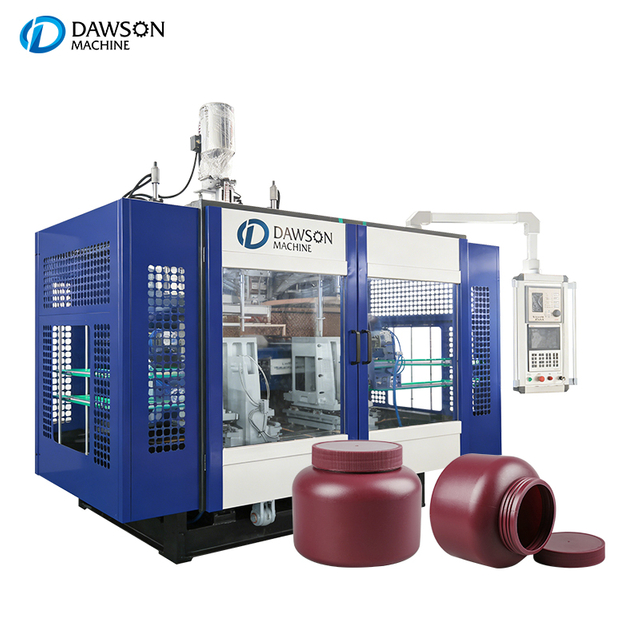
Mold testing ensures that the machine, mold, and material interact correctly. It's more than just a startup routine—it's a risk prevention tool. When you begin with a validated mold, the chance of late-stage problems drops sharply. Every blow molding operation should treat this as a formal process.
A bad mold fit or poor temperature control won’t always be visible at first glance. But over a 1,000-piece run, the results show up: dimensional drift, shrinkage, or production halts. Mold testing allows teams to adjust parison control, verify cooling flow, and fine-tune blowing pressure. Part quality improves dramatically when the mold test includes real-time parameter tuning—not guesswork.
There are five core areas that testing reveals:
Test Area | What It Confirms |
Mold Fit | Proper alignment and closure |
Thermal Behavior | Uniform mold heating and cooling response |
Parison Control | Balanced distribution before inflation |
Part Formation | Shape consistency and wall stability |
Process Reproducibility | Parameters stay stable across cycles |
For manufacturers like DAWSON, mold testing is more than internal QC. Their systems are designed to reduce the number of trial cycles while maintaining tight tolerances, especially important for clients running 24/7 lines.
You need mold testing before launching a new mold, after major mold repairs, or when switching product types. Even small changes like material blends or colorants can affect parison behavior—making a quick trial necessary to prevent mass defects.
Begin by cleaning the machine thoroughly. Remove grease, dust, and any residual resin from previous runs. Use a soft cloth and avoid abrasive tools that could scratch surfaces. Pay special attention to:
● Mold cavities
● Vent holes
● Machine platens
● Tie bars
Blocked vents or dusty surfaces can disrupt airflow during blowing and may result in burn marks, flash, or incomplete forming. A clean start means fewer surprises later.
Take time to study the mold design documentation and match it with production expectations. Focus on:
● Product dimensions and tolerances
● Gate and runner locations
● Cooling channel layout
● Expected cycle time and part volume
Clear alignment between design intent and testing goals helps avoid rework. If available, involve mold designers to clarify tricky areas like undercuts or unusual shrink zones.
Ensure the resin selected matches the mold's design and product application. Differences in melt flow index or drying needs can alter how the plastic inflates and cools.
Checklist for material prep:
● Dry the resin if required by specs
● Test and confirm moisture content
● Adjust melt temperature zones for the resin type
Even small changes in formulation or additives affect behavior during inflation, so using consistent material between testing and production is key.
Mounting the mold safely and checking its mechanical movement is essential. If something binds, leaks, or misaligns—it must be fixed before moving to pressure or heat. Take this step slow.
Before starting mold testing, it’s critical to follow a structured installation process. A controlled setup protects both the mold and the blow molding machine, while ensuring mechanical alignment from the very first cycle.
Follow these installation steps:
undefined Step 1: Position and secure the mold
Use a crane to lift the mold into place between the platens. Keep lifting hooks engaged until the mold is fully seated and clamped. Fasten mold halves using correct bolts and torque values.
undefined Step 2: Align guiding components
Match centering sleeves and guide pins carefully. Proper alignment helps distribute closing force evenly during blowing.
undefined Step 3: Verify mechanical travel and sensors
Check limit switches, ejector plate clearance, and mold opening stroke. Reset mechanical counters or PLC sensors if adjustments were made.
Manually close the mold using jog mode. Run through a few cycles at low speed. Observe if slide actions are smooth. If there's any hesitation, scraping, or vibration, stop and adjust.
Watch for mechanical interference. This includes core pulls, external pneumatic cylinders, and moving inserts. Misalignment here can cause serious damage during full-speed runs.
Check cooling lines, air pipes, and hydraulics. Look for leaks or improper fitting. Connect water and air lines to the correct inlets based on the mold diagram.
Mechanical Checkpoint | Why It Matters |
Slide Plate Smoothness | Prevents binding and part flash |
Clamp Force Distribution | Avoids uneven seal lines or blowouts |
Leak Inspection | Keeps cooling and air delivery stable |
Tip: After heating begins, steel expands. Recheck all moving parts once the mold reaches full temp.
Begin by adjusting the barrel heating zones based on the resin’s melt flow characteristics. Each zone may require a slightly different setpoint depending on material viscosity and machine design. After barrel temperatures are stable, raise the mold temperature gradually using a mold temperature controller.
Ensure both halves of the mold are heated evenly to prevent warping, shrinkage, or uneven cavity filling. Uneven heating also increases the risk of sticking and part distortion.
Input the recommended blow pressure, injection volume, and mold closing force for the product. These values depend on the mold size, material type, and the number of cavities.
● Too little blow pressure can result in under-inflated parts or weak sidewalls.
● Too much pressure increases stress on the mold and risks flash formation.
● Improper clamping force may lead to leakage or incomplete sealing during the blow cycle.
Use reference data if available, or refer to material supplier guidelines. Many machines allow you to save these as preset recipes for repeat use.
Before introducing resin or initiating a full cycle, perform several slow-speed dry runs. Manually close and open the mold while monitoring alignment and motion.
Check for:
● Smooth engagement of guide pins
● No sticking or vibration
● Consistent closing pressure across all corners
Running the mold at low speed helps identify mechanical friction or alignment issues that may not appear when cold, especially once thermal expansion begins. On integrated systems like those from DAWSON, these parameters can be adjusted digitally and stored automatically, making future mold setups faster and more repeatable.
Watch closely how the parison drops and inflates inside the cavity. Proper observation at this stage prevents downstream defects. Adjust:
● Length
● Thickness profile
● Blow timing
Aim for even cavity filling across all areas, especially corners and bases, where material distribution often becomes uneven.
Inspect the first parts carefully for visible defects, including:
● Rocker bottoms
● Uneven wall thickness
● Sink or shrink marks
These usually indicate cooling imbalance, incorrect temperature settings, or poor parison programming. Compare several samples to identify patterns rather than relying on a single part.
Modern DAWSON machines support real-time parameter monitoring. Operators can fine-tune pressure and timing without stopping cycles, which speeds stabilization and shortens the overall testing phase.
Change only one variable at a time. This method makes troubleshooting easier and helps isolate cause and effect. Record every adjustment, even small ones, so successful settings can be repeated during full production.
After collecting samples, let them cool to room temperature. Measuring hot parts gives misleading data. Stable readings require patience.
Use calipers, ultrasonic thickness gauges, and visual templates to evaluate sample parts.
Compare across at least 5 consecutive pieces.
Look for:
● Consistency in height and wall thickness
● Stable average weight
● Absence of warping or blistering
If trends show dimension drift or part inconsistency, check temperature zones and cooling circuit flow rates.
Inspection Point | Ideal Outcome |
Wall Thickness | Uniform ±0.3 mm across sides |
Weight Variance | Less than 2% deviation across samples |
Cavity Fill | Full shape with no short shots |
To ensure consistent mold testing outcomes and future reproducibility, it's essential to maintain a clear and detailed log of all critical process parameters. This record serves as both a reference for repeat runs and a troubleshooting guide when variations occur. Below is an example of what a standard mold testing log might include. All values are indicative and should be adjusted based on on-site calibration and specific mold or material requirements.
Parameter | Example |
Barrel temperature | 185–200°C |
Mold temperature | 35°C |
Blow pressure | 0.7 MPa |
Cycle time | 28 s |
Parison profile | Program A |
These entries should be updated in real time during testing and verified for each mold setup. For added traceability, consider including operator name, date, and machine ID on each log sheet.
Document:
● Setup sequence
● Approved settings
● Inspection steps
This supports shift-to-shift consistency.
Well-kept data speeds:
● Mold changeovers
● Line expansion
● Operator training
Note: Teams using DAWSON’s machine + mold packages often standardize testing templates across factories.

Reliable mold testing comes down to details.
It’s often the smallest habits that separate smooth validation from hours of confusion. If your team consistently applies just a few principles, testing will become faster, more accurate, and easier to document. These habits not only help you avoid common mistakes—they also lay the foundation for repeatable, high-yield production.Below is a summary of field-proven practices that apply to any blow molding machine setup:
Best Practice | Purpose | Impact on Testing |
Use virgin material | Prevents unpredictable shrinkage or contamination | More reliable wall thickness and strength |
Adjust one parameter at a time | Avoids overlapping variables during troubleshooting | Speeds up root-cause identification |
Let samples cool before measuring | Hot plastic expands and gives false dimensions | Improves accuracy of recorded data |
Wait for thermal equilibrium | Machine and mold behave differently during early warm-up | Prevents misleading defects |
Keep the same operator if possible | Reduces variability in handling and judgment | More consistent observations |
Mold testing defines production success. It confirms your blow molding machine and mold work as one system.When done right, it delivers stable dimensions, predictable cycles, lower scrap, and faster ramp-up. Structured preparation, careful tuning, and clear documentation turn testing into real advantage.With support from ZHANGJIAGANG DAWSON MACHINE CO.,LTD., manufacturers benefit from integrated machines, molds, and technical service. Their solutions help teams move from trial to mass production with confidence.Treat mold testing as an investment. It pays back through quality, efficiency, and long-term reliability.
A: Mold testing is the initial setup step that confirms a blow molding machine and its mold work together to produce parts with accurate shape, weight, and dimensions.
A: It ensures the mold fits properly, parameters are optimized, and the blow molding machine produces consistent results with minimal waste.
A: Clean the machine and mold, check all mechanical movements, and set the correct temperature, pressure, and parison parameters before running test cycles.
A: Uneven wall thickness, rocker bottoms, flash, or incomplete filling often result from poor alignment, incorrect settings, or unstable parison control in the blow molding machine.
A: Document all settings, measurements, and outcomes. Standardizing your mold testing process helps repeat results on the same blow molding machine in future runs.
A: Yes. While it adds time upfront, proper mold testing reduces scrap, downtime, and rework, improving the overall efficiency and cost-effectiveness of blow molding operations.