
Views: 0 Author: Site Editor Publish Time: 2026-03-03 Origin: Site


The Middle East is transitioning from a resource-export economy toward regional industrial integration and value-chain upgrading, positioning its plastics production — especially blow molded plastics and related equipment — as a strategically significant segment for global manufacturers and converters. This report synthesizes market data, structural drivers, and strategic imperatives to inform global equipment and technology suppliers seeking sustainable engagement in the region.
1. Market Fundamentals — Scale and Growth Trajectory
1.1 Blow Molded Plastics End-Market
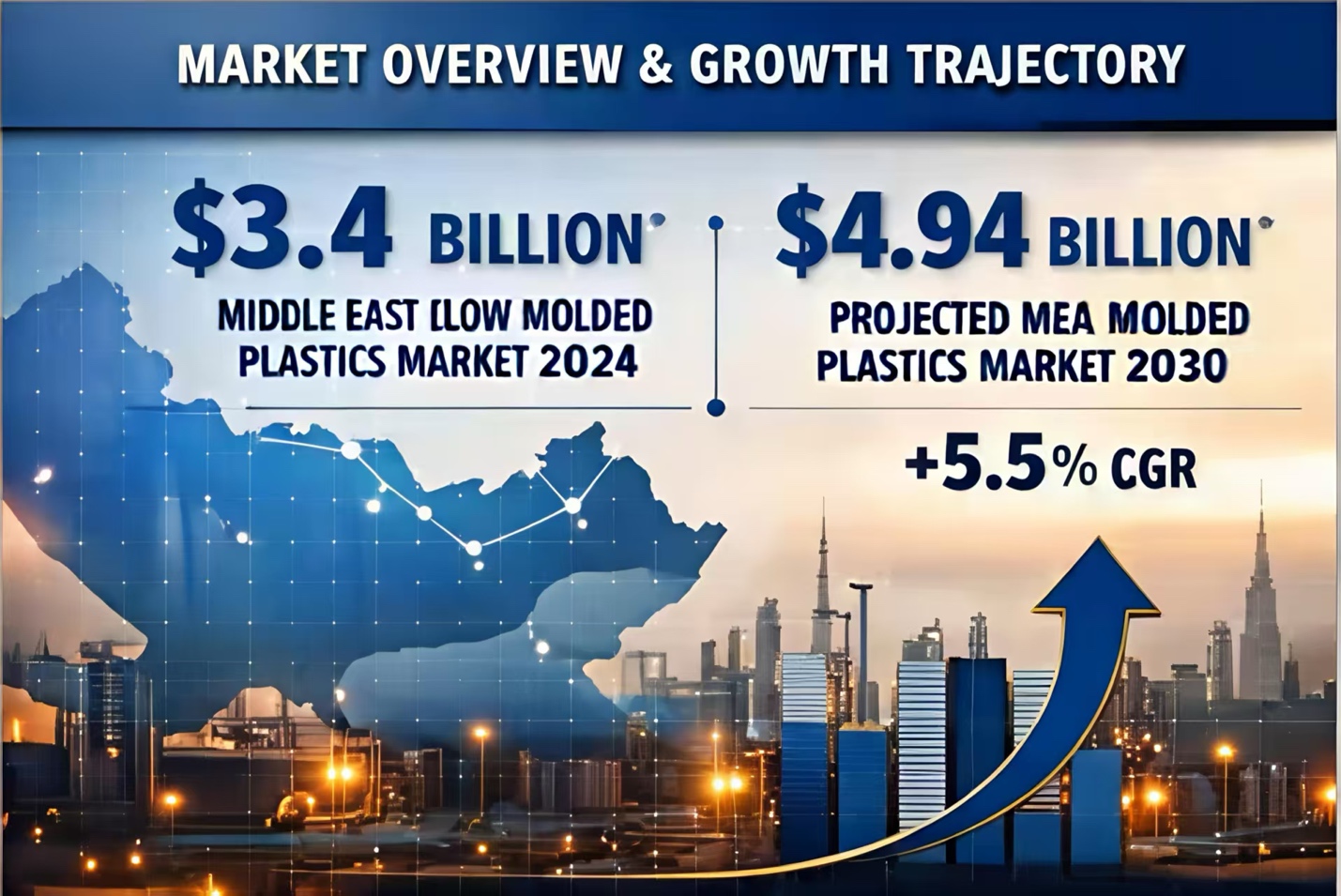
The most recent industry estimates place the Middle East blow molded plastics market at ~USD 3.4 billion in 2024, exhibiting demand driven by industrial packaging, food & beverage, and personal care applications. (Ken Research)
Expanding beyond pure regional data, the combined Middle East & Africa (MEA) blow molded plastics market generated roughly USD 3.4 billion in revenue in 2023 and is projected to grow to ~USD 4.94 billion by 2030, at a CAGR of ~5.5 % from 2024–2030. (Grand View Research)
This growth reflects:
· Increasing packaging demand in beverages and consumer goods;
· A slowly maturing industrial plastics production segment; and
· Investment in automation supporting complex blow molding lines.
1.2 Machine Market Dynamics
The blow molding machine segment — an important leading indicator for capital investment in processing capability — shows steady regional growth:
· In 2024, ~12,000 blow molding machines were consumed across the Middle East, with a market value of ~USD 458 million. (IndexBox)
· Forecasts suggest consumption rising modestly to ~14,000 units by 2035, with market value reaching ~USD 535 million, reflecting a 1.4 % estimated CAGR in value (2024–2035). (IndexBox)
This implies incremental capex growth rather than explosive expansion, characteristic of an industrial upgrade cycle rather than a nascent market boom.
1.3 Broader Plastics Industry Context
On the broader regional plastics scale:
· The regional plastics industry (inclusive of blow molding and other processing formats) was estimated at ~USD 22.2 billion in 2024 and is forecast to reach ~USD 28.44 billion by 2033 at a ~2.8 % CAGR, underscoring the structural growth from industrialization. (Grand View Research)
· Polyethylene (PE) — the primary resin used in blow molding — accounted for ~24% of market revenues in 2024, reflecting its strategic dominance in packaging and bulk industrial containers. (Grand View Research)
2. Structural Drivers of Demand
2.1 Industrial Packaging & Petrochemical Integration
Middle East economies leverage petrochemical feedstock advantages to capture downstream value from plastics production. In particular:
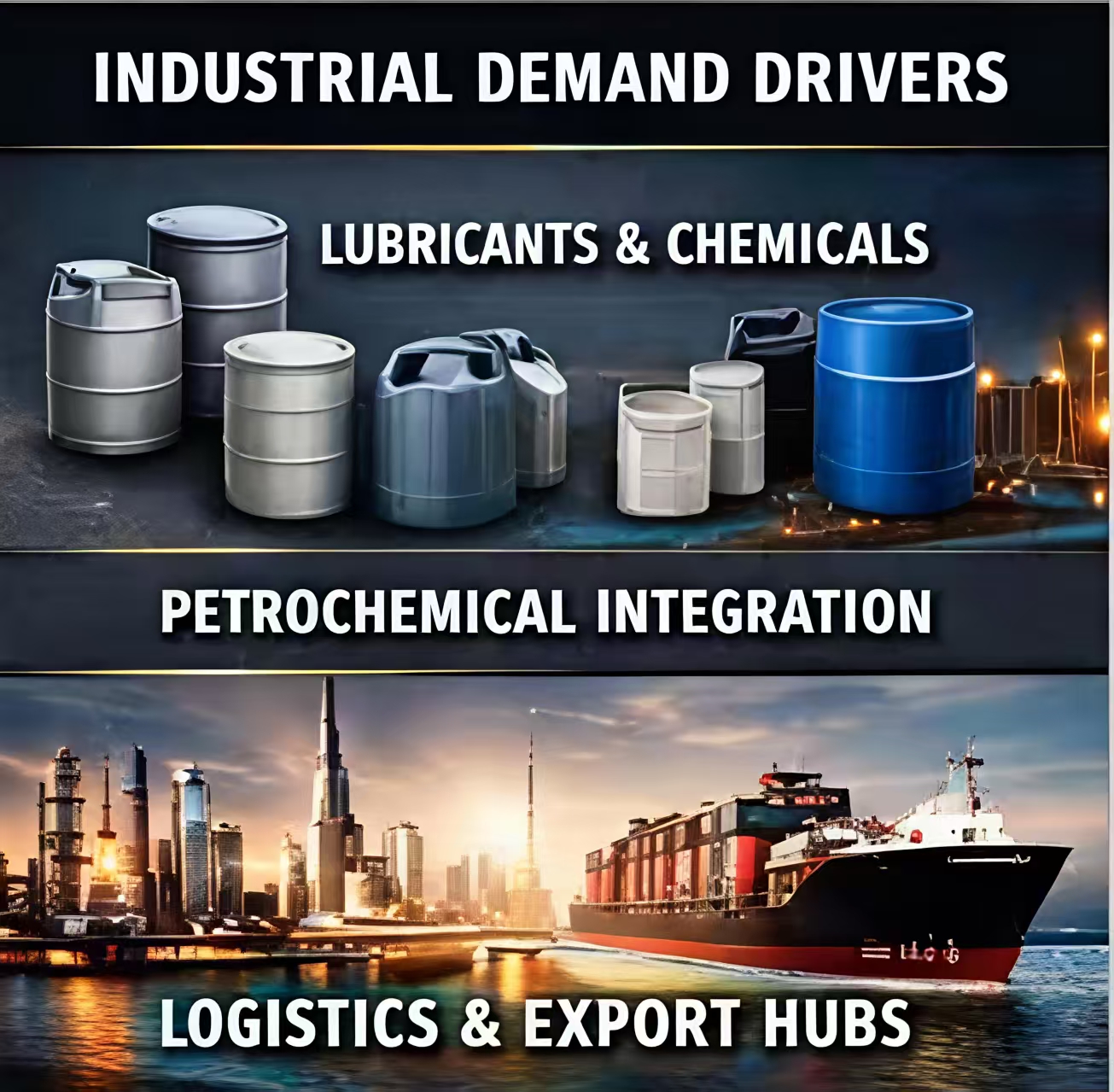
· Lightweight blow molded containers and industrial barrels play a central role in packaging industrial liquids, lubricants, chemicals, and consumer goods.
· In Saudi Arabia alone, the blow molded plastics segment is estimated at ~USD 540 million, underpinned by domestic feedstock availability and expanding end industries. (Ken Research)
2.2 Regional Industrial Growth Patterns
Population and urbanization in the Gulf Cooperation Council (GCC) and broader Middle East continue to support packaged goods markets:
· The Middle East & Africa plastic bottles and containers segment — a close downstream indicator for blow molding demand — is expected to grow from ~1.84 million tonnes in 2025 to ~2.19 million tonnes by 2031, with a ~2.99 % CAGR (2026–2031). (Mordor Intelligence)
This structural growth affects blow molded sectors ranging from bottles and jugs to heavy industrial containers, especially as logistics and distribution networks expand.
2.3 Technological Upgrading and Automation
The growth in equipment consumption reflects not just higher unit counts but a shift toward higher automation and more complex blow molding lines capable of addressing:
· Multi-layer and high-performance containers;
· Food-grade and pharmaceutical packaging;
· Industrial applications with precision and durability requirements.
These patterns signal capital investment rather than commoditized volume growth, which aligns with long-term industrialization strategies.
3. Policy, Institutional, and Competitive Context
3.1 Economic Diversification Policies
Major Middle Eastern economies (notably Saudi Arabia’s industrial strategy) explicitly aim to reduce dependence on crude exports by fostering chemicals and plastics manufacturing clusters. This reinforces:
· Upstream resin availability.
· Downstream conversion capacity.
· Investment into domestic processing and export-oriented manufacturers.
3.2 Competitive Landscape
· GCC markets attract participation from global blow molding OEMs due to stable demand and infrastructure investment capacity.
· Turkey and Saudi Arabia serve as regional hubs for machine exports and local production nodes, capturing a large share of equipment consumption. (IndexBox)
4. Strategic Implications for Global Suppliers
4.1 Positioning and Differentiation
Given modest absolute CAGR but significant base scale, the market favors strategic positioning:
· Local service and maintenance networks.
· Customized engineering for industrial and heavy packaging.
· Higher-efficiency and high-precision blow molding technologies.
4.2 Supply Chain and Partnership Opportunities
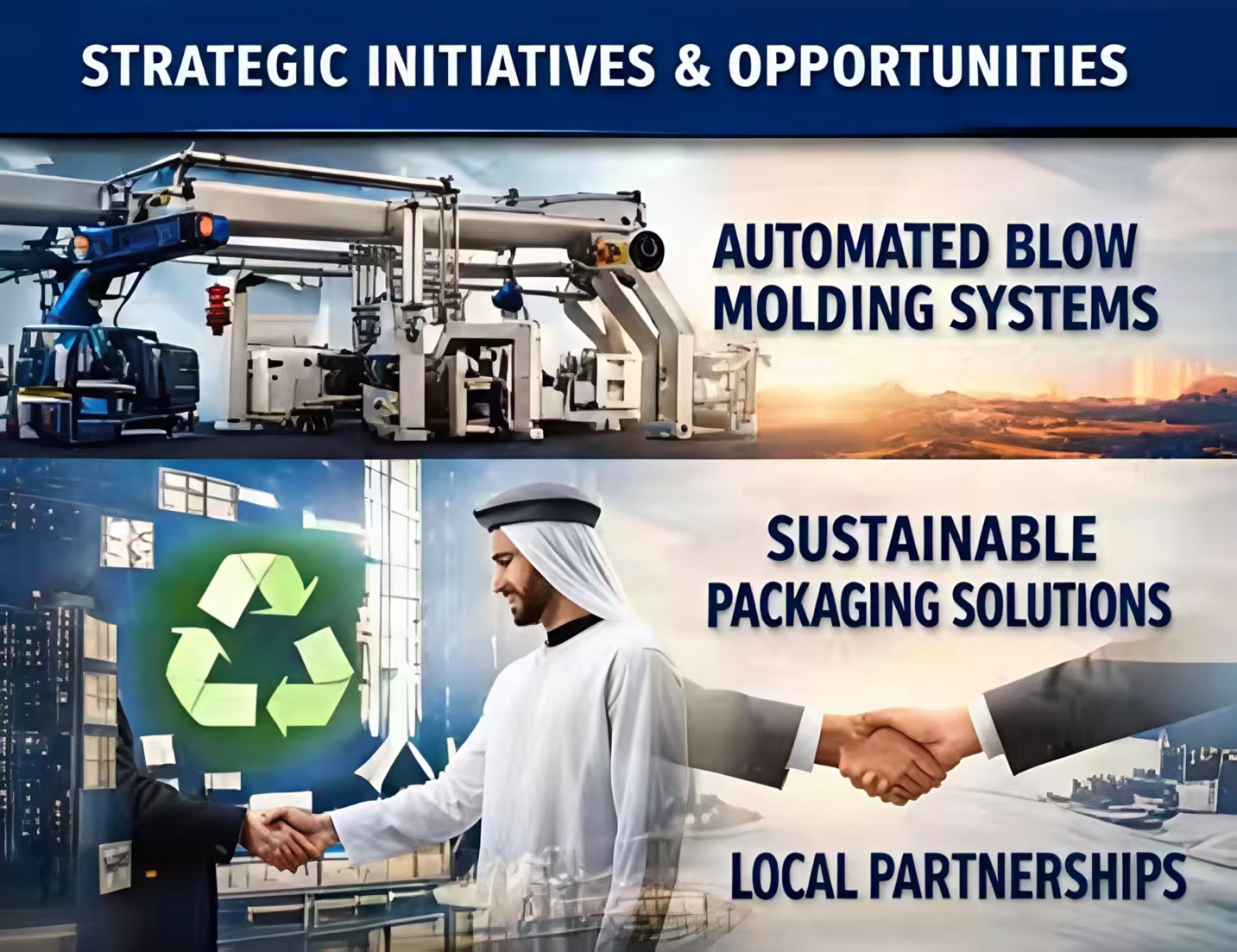
· Regional converters increasingly seek end-to-end solutions, including integrated blow molding lines, robotics, and quality automation, creating opportunities for higher-value system sales rather than standalone machines.
5. Dawson Group Strategic Vision in the Middle East
Against this backdrop, Dawson Group’s strategic vision is to evolve from a transactional equipment supplier into a long-term industrial partner for regional manufacturers. Our positioning is focused on:
5.1 Systemic Capability Enablement
· Providing integrated, scalable blow molding systems that align with complex industrial packaging requirements.
· Delivering retrofit and automation solutions that help converters optimize throughput and energy utilization.
5.2 Local Partnership Networks
· Enhancing local presence via service hubs and joint technical centers to support customers’ full product lifecycles.
· Engaging in collaborative development with regional converters to co-create specialized blow molding lines.
5.3 Sustainability Alignment
· Supporting customers in adapting to rising regulatory attention on recyclability and circularity by offering equipment designed for recyclable materials processing.
Conclusion
The Middle East blow molding and broader plastics market represents a strategic operational theatre — not because of explosive volume growth but because it embodies industrial upgrading, integration with petrochemical value chains, and demand for high-performance container solutions. Its relative stability, capital project orientation, and increasing automation investments make it a compelling focus for long-term strategic engagement by original equipment manufacturers and system integrators.