
Views: 0 Author: Site Editor Publish Time: 2025-11-10 Origin: Site


As global industries increasingly prioritize sustainability and intelligent manufacturing, the extrusion blow molding industry is evolving rapidly. Modern blow molding machines are no longer just mechanical equipment; they are energy-efficient, digitally controlled systems designed to optimize production, reduce waste, and minimize environmental impact. The combination of smart control and high-performance mechanical design represents the future of plastic manufacturing.
Energy efficiency has become a critical factor in selecting extrusion blow molding equipment. New-generation machines feature:
Servo-driven motors for precise and low-energy operation
Optimized heating zones that use minimal electricity to melt plastic efficiently
Variable-frequency drives (VFDs) that adjust motor speeds according to production load
These technologies can reduce energy consumption by up to 50%, significantly lowering operational costs. Energy-efficient machines not only save money but also contribute to eco-friendly manufacturing by reducing CO₂ emissions and minimizing plastic waste.
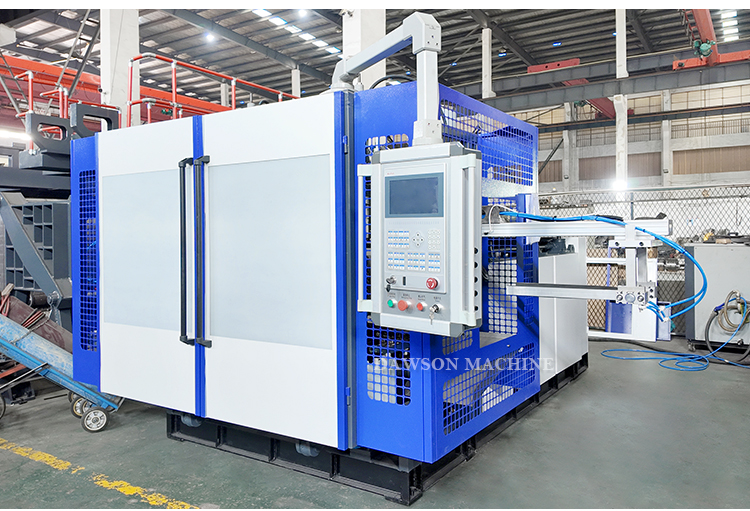
Modern blow molding machines integrate PLC (Programmable Logic Controller) and touch-screen interfaces to provide real-time monitoring of critical production parameters. These include:
Barrel and die head temperature
Extrusion speed and parison thickness
Compressed air pressure and cycle timing
Operators can adjust settings instantly, ensuring consistent product quality and reducing material waste. Some machines also feature automated alerts, stopping production if parameters exceed safe limits, further improving safety and efficiency.
Advanced models are designed to integrate with Industry 4.0 technologies, enabling:
Remote operation and monitoring via cloud systems
Data collection and performance analytics
Predictive maintenance to detect potential issues before downtime occurs
By analyzing trends in production data, manufacturers can optimize workflows, extend machine life, and prevent costly interruptions. This integration transforms traditional blow molding operations into smart factories.
Combining energy efficiency with digital intelligence provides numerous benefits:
Lower energy consumption and production costs
Reduced material waste and environmental footprint
Higher productivity with consistent quality
Greater operational control through real-time monitoring and automation
These advantages make energy-efficient, smart blow molding machines ideal for industries ranging from packaging to automotive and industrial plastics.
The future of extrusion blow molding lies in automation, energy efficiency, and digitalization. By adopting smart blow molding machines, manufacturers can enhance productivity, maintain consistent product quality, and meet the increasing global demand for sustainable production. Investing in these advanced systems ensures long-term competitiveness while supporting environmentally responsible manufacturing.