

Views: 0 Author: Site Editor Publish Time: 2026-03-13 Origin: Site


Choosing between blow molding and rotomolding is more than a technical decision—it directly affects product cost, strength, and time to market. If you design hollow plastic parts such as tanks, containers, or industrial components, the molding process you choose shapes your entire production strategy.
In this article, we compare both methods side by side and explain how factors like volume, geometry, and automation influence the final result. You’ll learn when investing in a blow molding machine makes sense, and when rotomolding offers better flexibility for your operation.
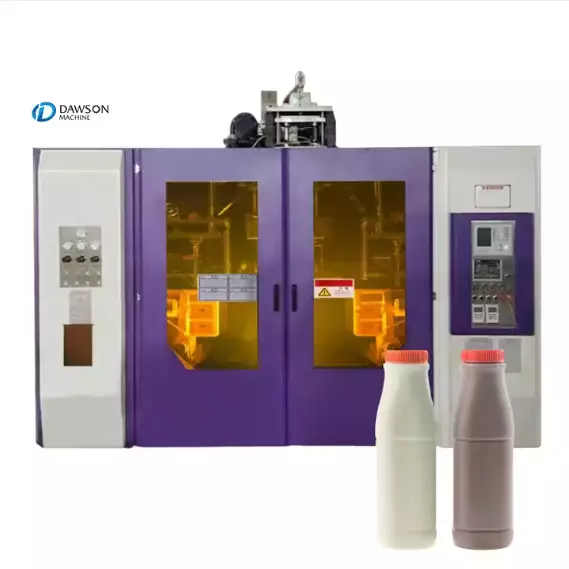
Blow molding is a high-speed, high-volume plastic forming method used to create hollow objects. It starts with melting plastic and forming a parison (a tube-like shape), which is then inflated inside a mold. As the air pressure pushes the plastic against the mold walls, it takes on the mold's shape. After cooling, the mold opens and ejects the finished part.
Common applications:
● Beverage bottles
● Automotive reservoirs (fuel, coolant)
● Plastic drums and canisters
If you're managing production for consumer packaging or automotive parts, a blow molding machine provides the scalability and speed needed to stay competitive.
Rotational molding, or rotomolding, involves loading powdered plastic into a mold, then rotating it slowly inside an oven. The plastic melts and coats the mold’s interior. After cooling while still rotating, the part is removed.
Best for:
● Large hollow items (e.g., water tanks)
● Complex shapes (e.g., kayaks)
● Low-volume, custom products
Rotomolding works well when part size or design flexibility outweighs cycle time concerns.
Both blow molding and rotomolding are used to form hollow plastic parts, but they operate quite differently. Their production characteristics impact everything from cycle time to surface finish. Below is a side-by-side comparison often used by engineers during early feasibility planning. It helps teams decide which process better fits their volume targets, product complexity, and automation goals.
Factor | Blow Molding | Rotomolding |
Cycle speed | Fast, continuous | Slow, batch |
Mold type | Steel, high precision | Aluminum, simpler |
Wall control | Very consistent | Variable |
Automation | High | Limited |
Surface finish | Smooth | Textured |
Typical volume | Medium to very high | Low to medium |
Blow molding emphasizes speed and repeatability. It supports large-scale output and works well with automated systems. Rotomolding, on the other hand, offers greater design freedom and is preferred when shapes are more complex or volumes are lower.
Designers also pay attention to how each method handles inserts or threaded features. Blow molding integrates them during the process, while rotomolding typically adds them after molding, often by hand.
Blow molding machines are built for high-efficiency manufacturing. They allow companies to produce thousands—or even millions—of identical parts with minimal interruption. This makes them ideal for industries such as consumer goods, automotive, and medical devices, where demand is constant and precision is critical. The process ensures consistency across batches while keeping unit costs low, especially at scale.
Modern blow molding systems often include automated features such as parison control, leak testing, trimming, and even labeling—all integrated directly into the production line. These features reduce labor costs and speed up downstream workflows. As a result, manufacturers enjoy fewer bottlenecks and better throughput, particularly when paired with real-time monitoring systems and digital controls.
When the goal is to reduce weight without compromising structural integrity, blow molding stands out. It enables precise wall thickness control and excellent mechanical strength, making it ideal for pressure-sensitive applications like beverage bottles, fuel tanks, and medical fluid containers. The resulting products are both lightweight and durable, offering performance benefits across transport, storage, and end use.
Tip: Brands like DAWSON engineer blow molding machines for continuous, high-speed output—especially valued in automotive and FMCG sectors.
Rotomolding excels when part size or geometry exceeds what traditional molding methods can easily handle. Its ability to produce seamless, stress-free structures makes it popular in sectors that require large tanks, ergonomic outdoor furniture, or industrial enclosures with rounded edges and integrated supports. Unlike blow molding, it doesn’t rely on high-pressure molds, allowing for greater flexibility in shaping oversized or asymmetrical products.
This process is especially suited for low to medium production runs where design variation or custom colors are needed. Rotomolding allows quick mold changes and fast material swaps, which makes it ideal for R&D, seasonal products, or limited-edition product lines. It’s frequently used by manufacturers exploring new markets or producing multiple SKUs with slightly different configurations.
Rotomolding uses lower-cost aluminum molds that don’t require internal cores or complex moving parts. As a result, it provides a cost-effective path for prototyping or validating designs before moving into full-scale production. This helps companies reduce risk during product development and avoid overcommitting to expensive tooling too early.
Note: Companies producing heavy equipment parts or outdoor consumer goods often start with rotomolding for its flexibility and tooling savings.
When evaluating blow molding vs. rotomolding, it's essential to look beyond machine price alone. True production cost includes equipment, mold investment, labor requirements, energy use, and long-term throughput. Manufacturers often use the following breakdown to estimate total cost of ownership based on project scale and production goals.
Here is how both methods usually compare:
Cost Element | Blow Molding | Rotomolding |
Machine investment | Higher | Lower |
Mold cost | Higher | Lower |
Unit cost at scale | Low | Medium |
Labor demand | Low | Higher |
Maintenance | Predictable | Manual |
Blow molding demands higher upfront investment in both machines and tooling. However, its efficiency at scale significantly reduces per-unit cost over time, making it ideal for long-term, high-volume operations. In contrast, rotomolding remains budget-friendly for small runs but can become costly as volumes increase due to higher labor inputs and slower cycle times.
Brands like DAWSON make this transition easier with modular blow molding machine systems that scale with your output—without requiring a full system overhaul.
Blow molding offers better control over wall distribution, making it ideal for pressure-sensitive products and fluid containers. Rotomolding often results in variable thickness unless the rotation speed and heating cycle are optimized carefully.
Rotomolded parts tend to be thicker and heavier but also more flexible, which helps absorb impact in outdoor applications. Blow molded items are lighter, more rigid, and better suited for parts requiring dimensional stability.
Blow molding supports better in-mold labeling, smoother surfaces, and uniform coloring across batches. Rotomolding can support embedded logos, but usually requires more manual intervention and additional finishing steps.
Feature | Blow Molding | Rotomolding |
Wall Thickness | Uniform, controllable | Variable, less precise |
Structural Behavior | Light, rigid | Thick, flexible |
Surface Finish & Branding | Smooth, easy labeling | Textured, manual logos |
● Engine coolant reservoirs used in modern vehicles
● Food-grade bottles and jars for beverages and condiments
● Windshield washer tanks designed for durability
● Stackable storage bins for logistics and warehousing
● Agricultural tanks for water and chemical storage
● Buoyancy devices used in marine environments
● Outdoor furniture built for weather resistance
● Insulated containers for temperature-sensitive transport
If your production demands high output with reliable quality, a DAWSON blow molding machine offers dependable performance and lifecycle cost advantages.
Choosing the right blow molding machine depends heavily on the product’s shape, material, and performance goals. Different molding types serve distinct applications, from high-volume container production to lightweight PET packaging. Below is a simplified comparison of the three main types of blow molding and where each one fits best.
Machine Type | Best For |
Extrusion Blow Molding | Large containers, hollow parts, continuous runs |
Injection Blow Molding | Small, precise bottles with narrow necks |
Stretch Blow Molding | Lightweight, high-clarity PET bottles |
Each method offers unique advantages in terms of wall control, production speed, and finish quality. For manufacturers handling diverse product lines, investing in the correct machine type ensures better efficiency and fewer compromises.
Look for:
● Servo-controlled clamping
● Multi-layer co-extrusion capabilities
● In-line vision inspection
● Digital HMI for parameter control
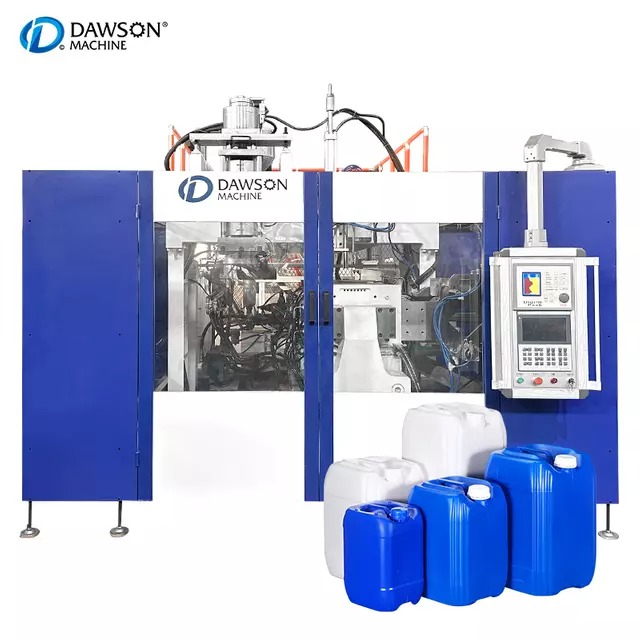
Blow molding and rotomolding serve different goals. Blow molding suits high-output production and smooth finishes. Rotomolding fits complex shapes and flexible batch sizes. For manufacturers needing speed and consistency, a blow molding machine is the better choice.
Criteria | Choose Blow Molding | Choose Rotomolding |
Production Volume | High | Low to medium |
Part Complexity | Moderate | High |
Mold Investment | Higher | Lower |
Automation Potential | Excellent | Limited |
Surface Finish | Smooth | Textured or uneven |
Cycle Time | Fast | Slow |
ZHANGJIAGANG DAWSON MACHINE CO.,LTD. offers automated solutions built for efficiency. Their machines support long-term performance, helping businesses lower costs while maintaining quality.
A: Blow molding uses air to shape melted plastic inside a mold, while rotomolding uses heat and slow rotation to coat the mold's interior with plastic powder.
A: A blow molding machine is ideal for high-volume production with consistent shapes, especially when smooth surfaces and fast cycles are required.
A: Blow molding handles moderate complexity well, but for highly irregular shapes, rotomolding is often the better choice.
A: A blow molding machine supports automation, faster cycle times, and repeatable quality, making it efficient for large-scale manufacturing.
A: Rotomolding typically requires lower-cost molds, making it a cost-effective option for small production runs or prototypes.
A: Not easily. A blow molding machine integrates better with automated systems, while rotomolding relies more on manual steps.